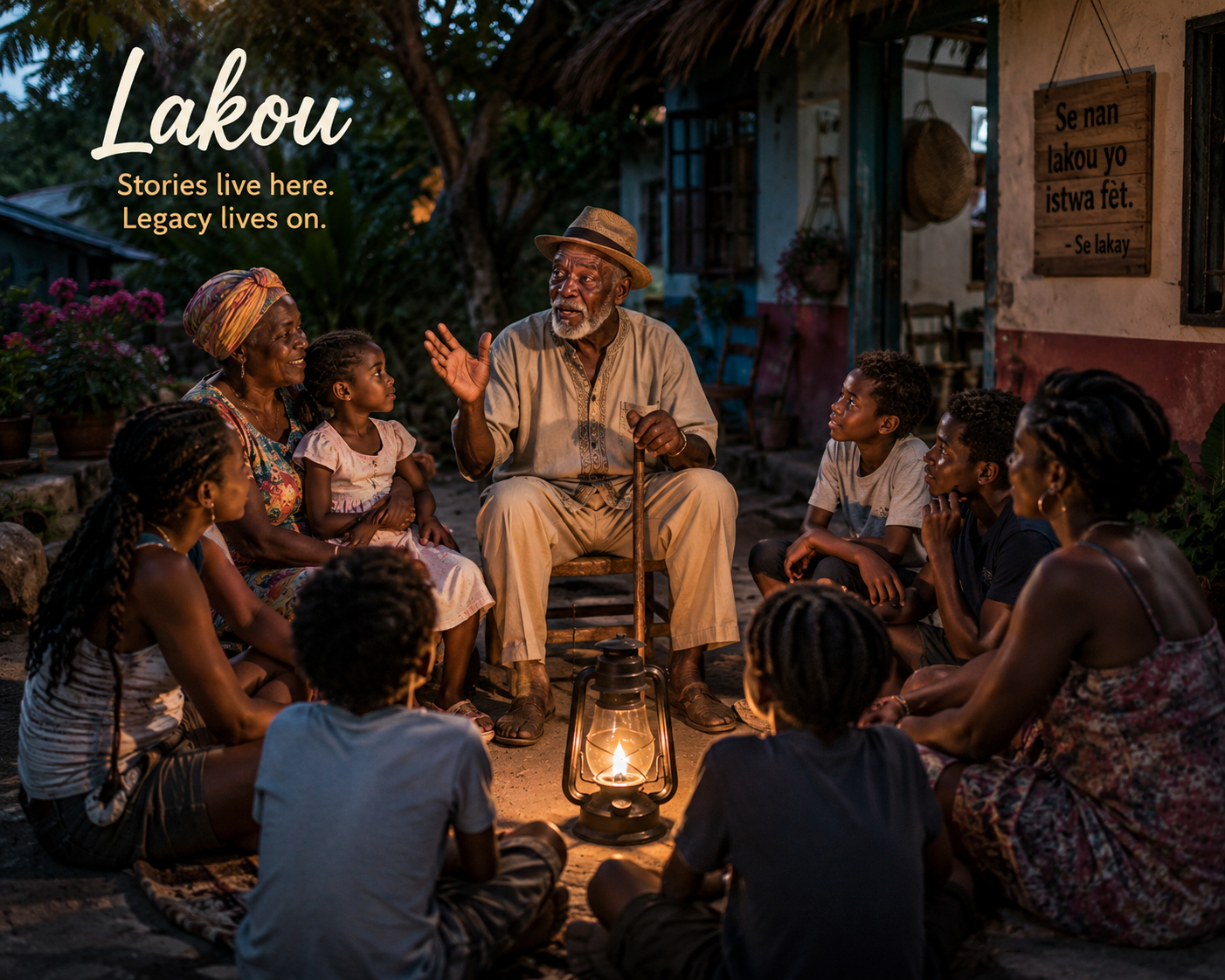
Prologue
A family without stories
loses part of itself.
If we don't preserve our stories, we don't just lose memories. We lose identity.
Before it was a family, it was a decision. Someone left a country. Someone stayed. Someone worked a job they never described. Someone carried a name across an ocean and handed it to you.
You are the continuation of choices you never witnessed. Every family holds an archive — in recipes, in accents, in the way a room goes quiet at a certain name. Most of it has never been written down. Most of it lives in one or two people, and only for as long as they do.
Questions only your family can answer
- 01Why do you cook that recipe?
- 02Why did your grandparents come here?
- 03Who taught you to pray?
- 04Why is your family named what it is?
- 05What sacrifices built your future?
- 06Who will remember them when you're gone?
Every generation loses stories. Some are forgotten. Others are never recorded.
When families don't preserve their own history, someone else decides what gets remembered.
It rarely feels like loss while it's happening. It feels like a busy week. A phone call not made. A question saved for the next visit. Then the person who held the answer is gone, and the answer goes with them.
Records written by strangers. Census lines. Paperwork. A version of your people told in someone else's voice, for someone else's purpose — and it becomes the only version left.
Identity disappears.
A child grows up not knowing whose courage they inherited.
Culture disappears.
A language, a dish, a song, a holiday — practiced without knowing why.
Wisdom disappears.
Lessons paid for in hardship have to be learned again from scratch.
History disappears.
A life that shaped a family leaves no record that it happened at all.
None of this is inevitable. It only requires that somebody asks, and somebody records the answer.
An hour at a kitchen table. A voice, kept. One story written down outlives every object in the house. You do not need to be a historian. You need to be the person in your family who decided to start.
Record your family's history before it's lost.
The Legacy Project is not a product. It's a practice — carried into the places where families already gather.
- Schools
- Libraries
- Churches
- Museums
- Community centers
- Historical societies
- Family reunions
- Juneteenth
- Haitian Flag Day
- Hispanic Heritage Month
- Black History Month
- Sunday dinners
Bring it to your family, your congregation, your classroom, your reunion. The tool is simple. The commitment is what matters.
One hundred years from now, what will your family know about you?